‘We need more schemes to help Londoners stay in London’ – how one charity worker bought his first home near family

For Thai, the dream of owning a home never meant giving up on London. The 33-year-old homelessness charity practitioner has bought his first property at Pocket’s Sheepcote Road development in Harrow, enabling him to put down roots close to his family.

Born and raised in West London, staying in the city was Thai’s priority.  “I’d already built a life here with work, sports, friends and family,” he says. “I didn’t want to leave that behind.”

Thai came across Pocket – an innovative housing developer designed to support first-time buyers – on social media years before he was ready to buy a home, and kept them in mind until he started saving up.
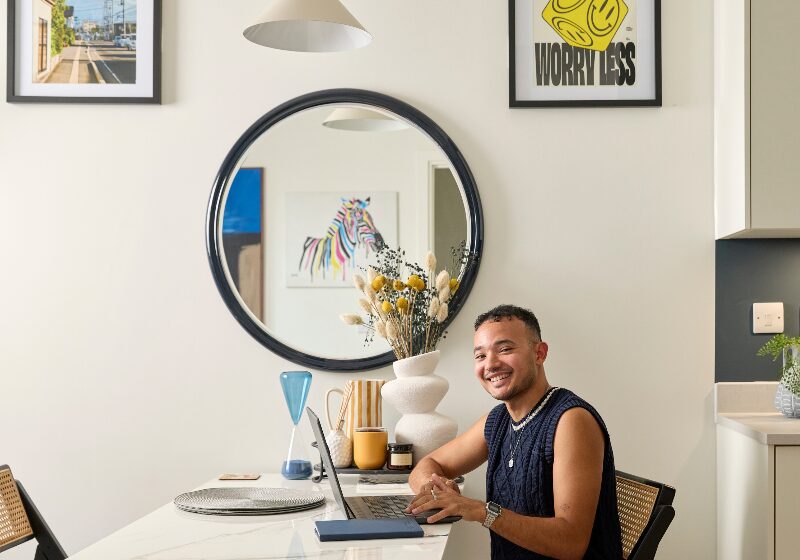
In 2019, navigating a challenging job market after university, Thai moved back in with his mum in Ealing. He ended up staying for the next seven years to give himself the best chance of building up a healthy deposit. “Moving home felt like a step backward, but I realised I could contribute some ‘rent’, buy my own food and still save money to get on the property ladder,” he explains.

“I thought I’d have to move out of London into an older property to stay within my budget,” Thai says, until the Pocket team suggested their Sheepcote Road development in Harrow.

Despite being unfamiliar with the area at first, Thai’s viewing showed him the appeal of living in Harrow.  “I realised I could be close to where I grew up, well-connected to the city centre and have green spaces, great restaurants and a gym on my doorstep,” Thai explains. “My mum came to the viewing with me and couldn’t believe it either, just how much I could get for my money.”

While many first-time buyers often find themselves compromising on space or location, Sheepcote Road ticked all the boxes for Thai. “With high ceilings and clever storage, the flat is so well-thought out,” he explains. “I got everything I wanted.”

Thai purchased a show home at Sheepcote Road, meaning he could move into a fully-furnished, decorated space. “At the viewing, I joked that it would be great to just move in to this flat with everything already done – and I could,” he says. “The process was so straightforward and hassle-free.”

Thai continues: “My mum was impressed with the interior design too. The colour scheme, the modern features, the quality of the appliances – I wouldn’t have been able to think it all up myself.”

“I wake up every morning still in disbelief that this is my home.”

The communal amenities in the development have also given Thai more scope to work and socialise. “Having a co-working space is a great option when I want a change of scenery from the flat, and the roof terrace is ideal for hosting friends.”

Reflecting on his homebuying journey, Thai believes there is a clear need for more housing schemes that support first-time buyers, especially in London.

Research from Public First, a leading public policy research agency, finds that two in five young Londoners are planning to quit the capital in the next five years – the biggest financial pressure for almost all respondents is their home, as rents and living costs continue to rise and homeownership feels increasingly out of reach.

“Without Pocket, I wouldn’t have been able to buy in London at this stage,” Thai says.

“Schemes like Pocket help Londoners stay in London.”

Thai purchased his one bedroom home at Pocket’s Sheepcote Road development in Harrow for £265,000 in August 2026.

To be eligible to purchase a Pocket home, the prospective buyer can’t already own another property, and must live or work in London. All buyers must earn under the Mayor of London’s income threshold for affordable housing (currently £90,000). When the homes are sold on, new purchasers must meet the original criteria including a household income below the Mayor of London’s affordable housing threshold.

Buyers own 100% of their property, which are sold at a 20% discount to the local market.

For more information or to register interest, prospective buyers can visit www.pocketliving.com or call 020 7291 3683.
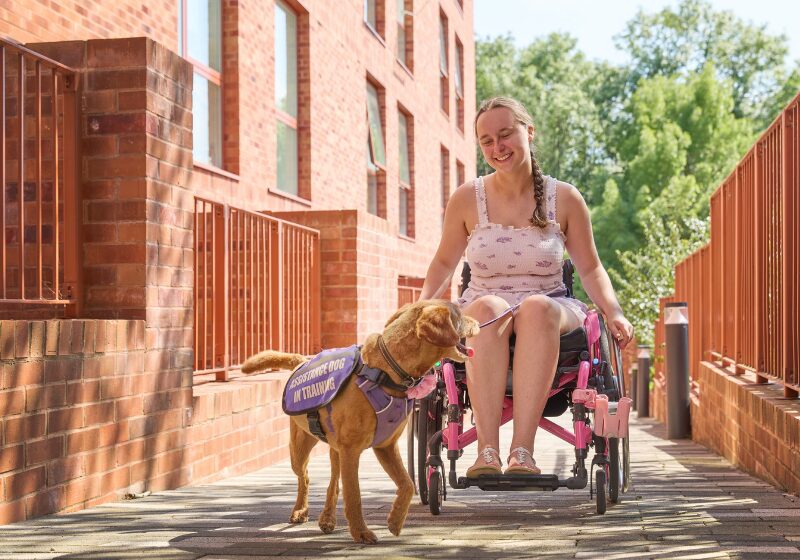

“To have a home that’s level access throughout is unheard of” – one first time buyer’s search for an accessible London home

For many first time buyers in London, getting on the housing ladder can be challenging enough – compromise is usually key. But for Artistic Access Consultant Katie McConnell, 23, the list of requirements for her first home was non-negotiable.

“I needed step-free access, an accessible bathroom, space for my wheelchair and somewhere suitable for my assistance dog, Bella,” she explains.

After training at drama school and spending her early career as a performer in the theatre, Katie became disabled and found opportunities on stage increasingly limited. Rather than leave the industry altogether, she now works with theatres, producers and creative organisations to improve accessibility for disabled performers and audiences.

Her efforts have also had to extend to the property industry. “Whilst renting and starting my homeownership journey, I have found myself having to educate most of the people I have come across in the process,” she says.

But Katie was determined to fulfil her ambition of owning a home in London with her partner. “Living in London felt achievable to me only because nothing has ever felt unachievable to me,” she explains. “Having been in an industry that often isn’t accommodating, I’m used to working hard to reach my goals.”

Having previously rented in Norfolk, Katie and her partner moved back in with her mum in London to begin the search for a suitable home. The property’s location was as important as the property itself, as just 33% of London Underground stations are accessible.

“I’m in and out of central London a lot for work, so I needed to work backwards,” she says. “I looked at what stations were accessible in Theatre Land and narrowed down the search to areas on tube lines servicing those stations – some were out of our price range or a little too far out, so we quickly figured out a radius that would work.”

After some challenging viewings, including one where Katie couldn’t even get inside – “there were stairs to enter the building, so I couldn’t access the lift in the foyer,” she recalls – she spotted a Pocket Living development advertised in an email from her estate agent.

Pocket Living is an innovative housing developer that delivers discounted one-bedroom apartments to first time buyers in London, with homes currently for sale in Walthamstow, Harrow and East Croydon.

“This was the fifth property we viewed and it was really straightforward to organise. After looking around the flat and the roof terrace, which was also accessible, we got vouchers for a coffee shop nearby which was really nice. It made it seem like a real community and that was a big selling point for us. Soon after we decided to move ahead with Pocket ,” Katie explains.

“Moving was extremely quick – we worked hard for it, but the whole process of viewing, offering, signing a mortgage contract and moving in was far less stressful than I expected. We’re definitely privileged to have secure careers and the ability to buy a house at this age, but we were pleasantly surprised by how smooth the process was with Pocket.”

Katie also found it easy to work with Pocket to ensure her home was suitable for her specific needs, including installing a custom wardrobe to reach all her clothes from a seated height.

“The property was already very accessible when we first viewed it, which was an incredible selling point,” she says. “I don’t think people realise how long and strenuous the process can be to install ramps or widen doors in a property. It’s taken so much stress away.”

When renting, even basic accessibility improvements to meet Katie’s needs were off limits. “I didn’t have an accessible home when renting and it was virtually impossible to do so,” she says.

Only 3.3% of open market homes in England are fully wheelchair accessible according to a 2025 report from Habinteg Housing Association, with findings suggesting that in the best case scenario there will be one new wheelchair accessible home delivered for every 210 people in Greater London. In the North West of the country there will be just one new wheelchair accessible home for every 2,006 people in the population.

For many disabled renters, including Katie, temporary solutions are the only option.Katie explains: “When we rented we weren’t allowed to put permanent grab rails in the shower, so I relied on adhesive ones which weren’t safe.”

Homeownership has been transformative for Katie’s independence as well as her peace of mind.

“I work from home a lot and am sometimes housebound due to my chronic illness, so it’s been incredible to have a blank canvas and create a space that feels like a haven. To have a home that’s completely level access throughout is just unheard of, and the outside and communal areas are all accessible.”

Pocket developments include co-working spaces and rooftop gardens, encouraging residents to get to know their neighbours – and, in Katie’s case, for her neighbours to get to know her assistance dog Bella, a four-year-old mini wirehaired Labradoodle.

“Bella loves her new home and the surrounding green areas, and our neighbours love her,” Katie says. “Everyone is very friendly – when we’re on our way in or out of the building, people say hello to me but most of them will say hello to Bella first!”

“It’s really lovely that we live in a place where you can have real human interactions. When you’re in and out of central London, you don’t get that all the time.”

Reflecting on her homebuying journey, Katie recognises the systemic challenges first time buyers face.

“I think there should be more onus on the industry and government to educate themselves on how they can better support first time buyers, especially those that face additional barriers to buying a property, taking some of the burden away from buyers who are having to advocate for themselves.”

Katie’s advice to prospective first time buyers is to commit to saving over a longer period of time and have a clear understanding of the market you’re looking in.

“As soon as I turned 18, I prioritised putting the maximum amount into my LISA every year, and compromised on other things like clothes or days out. It’s also important to be clear on what you want early on – not just wanting to buy your first house, but whereabouts and what it might look like. Knowing your budget doesn’t help unless you know what your budget can get you. Being aware of the market and its fluctuations was really helpful.”

You can follow Katie’s journey as a Disability Advocate and Artistic Access Consultant, via her Instagram @katieanna.mcconnell.

All Pocket homes are designed to be accessible for a wide range of occupants and their guests, including older people, those with reduced mobility and some wheelchair users, and can often be adapted further based on the owners’ requirements. In addition to this, most Pocket developments also include specifically designed M4(3) adaptable wheelchair user homes.

To be eligible to purchase a Pocket home, the prospective buyer can’t already own another property, and must live or work in London. All buyers must earn under the Mayor of London’s income threshold for affordable housing (currently £90,000). When the homes are sold on, new purchasers must meet the original criteria including a household income below the Mayor of London’s affordable housing threshold.

Buyers own 100% of their property, which is sold at a 20% discount to the local market.

For more information or to register interest, prospective buyers can visit www.pocketliving.com or call 020 7291 3683.
10 years on in his Pocket home – How one Londoner’s first home unlocked life with his Taiwanese partner and is still delivering a decade later

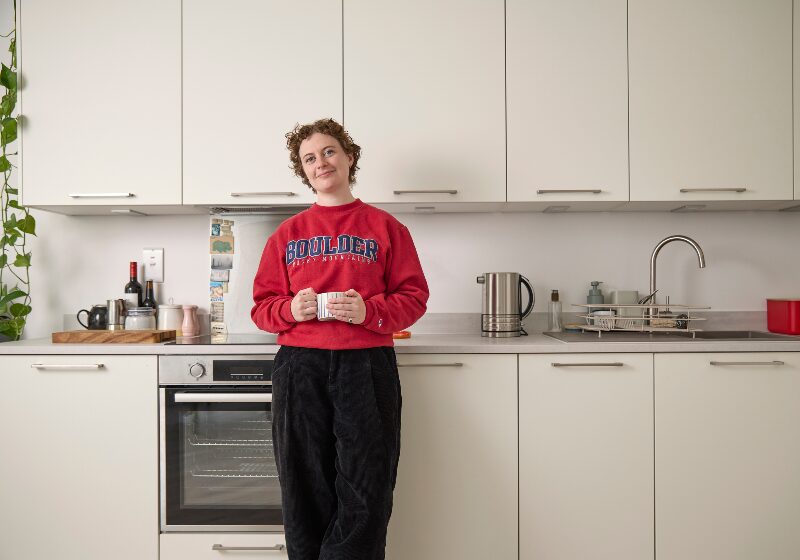
Adam Lewis, who is in his thirties and works in special educational needs for a local authority, bought his first home in Wandsworth in 2017 through affordable housing developer Pocket, where he has lived with his partner ever since.

“My heart was set on Wandsworth, which is near where I grew up,” Adam explains. “I like it as it has everything on its doorstep, including a huge library, cinema, a park, as well as good connections into central London, and much lower council tax than other nearby areas.”

At the time, Adam’s partner was living in Taiwan, where the two had met during his year abroad.

“Buying our first home meant that he could move back to the UK from Taiwan, providing a much more stable foundation without having to worry about rent going up, and enjoy our life together after years of being long distance”, explains Adam.

Pocket is an innovative housing developer that delivers discounted one-bedroom apartments to first time buyers in London, with homes currently for sale in Walthamstow, Harrow and East Croydon.

“I’d lived in a few places including Belgium and China, and Surrey whilst my partner did his Masters there, but we both decided to move back home to our respective families in Clapham and Taiwan whilst we saved up for a deposit. This really helped, but Pocket also gave us the biggest shortcut as the homes are more affordable.”

Amidst continuing calls for the Government to revive Help to Buy, Adam recognises how beneficial the scheme was when he purchased his apartment in 2017. “It really helped us get onto the property ladder,” he reflects. “I also think the Government should do more to promote smaller and more diverse developers like Pocket, who have a clear mission to help first time buyers.”

When it came to their property search Adam only viewed one development after he spotted it advertised in his local council newsletter.

“I thought about viewing other properties but this ticked all the boxes,” says Adam, who was keen to find a one-bedroom property, rather than a studio, with good storage in a contemporary building in Wandsworth.

“Buying through Pocket was seamless – the team were so responsive and it was clear at the viewing that each flat had been well-designed to maximise the space.”

Almost ten years on, Adam and his partner still call Pocket’s Mapleton Crescent SW18 development home. “We’re very settled here and love the setup,” he says.

“There’s a strong community atmosphere, the appliances are still in great condition and the flat is incredibly well-insulated and energy efficient,” Adam explains. “Nothing needs doing up – everything works – which is in complete contrast to my sister who bought a Victorian conversion and has had expensive problems to sort ever since.”

Beyond the flat itself, Adam has made use of the shared amenities in the development, including the roof terrace, communal lounge and bike storage. “The amenities are really well-thought out,” he says. “Having a swimming pool or gym would lead to a ridiculously high service charge, but Pocket has struck the balance between providing value for residents while keeping it affordable.”

Adam’s advice to prospective first time buyers is to be consistent with saving and stay resilient in what can be a daunting market.

“Definitely don’t give up – it’s made such a difference having our own place, somewhere we can put our own stamp on and feel truly settled.”

To be eligible to purchase a Pocket home, the prospective buyer can’t already own another property, and must live or work in London. All buyers must earn under the Mayor of London’s income threshold for affordable housing (currently £90,000). When the homes are sold on, new purchasers must meet the original criteria including a household income below the Mayor of London’s affordable housing threshold.

Buyers own 100% of their property, which are sold at a 20% discount to the local market.

For more information or to register interest, prospective buyers can visit www.pocketliving.com or call 020 7291 3683.

‘I thought I’d have to get a new job to buy independently in London’ – a Government lawyer’s route onto the property ladder

After six years of house shares across London, Rachel, a 31-year-old lawyer for the Government, has bought her first home at Pocket’s Forest Road development in Walthamstow, North East London.

Originally from North East England, Rachel relocated to London after university, drawn by the capital’s job prospects, but found herself frequently moving between rental properties with little stability.

“I lived in seven different homes over six years, moving from Kilburn to West Hampstead to Shepherd’s Bush and then further out around Blackheath in South London,” she explains. “I was lucky to always be living with friends but when one person decided to move, it had a knock-on effect on the rest of us.”

Like many first-time buyers, Rachel felt like solo homeownership in London would be out of reach and was planning to change her job earlier than planned in order to achieve it.

“Working in the public sector, I thought I’d have to get a new job to afford a home independently – I didn’t think it was possible to keep my current job   and get on the property ladder in London.”

Rachel discovered Pocket – an innovative housing developer designed to support first-time buyers – through a friend who works as a teacher and had purchased a home at their Woodside Park development in Finchley, suggesting Rachel might qualify for a Pocket apartment too. All it took was one viewing and a few weeks later, Rachel was settling in to her first home.

“I hadn’t viewed any other properties because homeownership felt impossible until I’d found a new job,” she explains. “When I looked at Forest Road, I realised a new build property would give me more peace of mind, and the apartment was even more spacious than I expected.”

Rachel was drawn to Walthamstow’s blend of lively pubs and nature, with parks and wetlands on her doorstep at Forest Road. “Having grown up in the countryside near Yorkshire, access to green space in London was really important to me,” she says. The strong transport links ticked another box. “Being so close to the Victoria line is much more convenient than the trains I relied on around Blackheath, and the bike storage at the development has motivated me to start cycling to work.”

For Rachel, the shift from renting to owning a home has been transformational.

“Having complete control over my living situation has made a huge difference to my everyday life and stress levels – I finally feel secure here.”

The community atmosphere at Forest Road also helped Rachel settle in. “I was added to a huge group chat when I moved in and people came to say hello, and the communal roof terrace is a great space for inviting friends over.”

Reflecting on her experience, Rachel believes there is a clear need for more schemes that support first-time buyers and more openness when talking about personal finances.

“One of the biggest challenges is building up a deposit, which would have taken me even longer without Pocket’s contribution,” she says. “I think we can all be reluctant to talk about money, but I wouldn’t have known Pocket was a possibility without asking someone else about their homebuying journey.”

Rachel purchased her one bedroom home at Pocket’s Forest Road development in Walthamstow for £297,000 in August 2026.

To be eligible to purchase a Pocket home, the prospective buyer can’t already own another property, and must live or work in London. All buyers must earn under the Mayor of London’s income threshold for affordable housing (currently £90,000). When the homes are sold on, new purchasers must meet the original criteria including a household income below the Mayor of London’s affordable housing threshold.

Buyers own 100% of their property, which are sold at a 20% discount to the local market.

For more information or to register interest, prospective buyers can visit www.pocketliving.com or call 020 7291 3683.

Your First Home scheme: what first time buyers need to know 

If you’ve been saving for a deposit and wondering whether it will ever be enough, the government’s recent announcement of Your First Home may have caught your attention. This is a new equity loan scheme that is expected to support 2.5% deposits, backed by 20% government equity loans, for first time buyers purchasing a new build home from a developer signed up to the scheme. 

How the Your First Home equity loan scheme works: what we know so far 

We don’t have that much detail yet. The expectation is that a first time buyer would be able to put down a minimum of a 2.5% deposit and the government would lend another 20% of the price. The equity loan would have an initial interest-free period and the remaining 77.5% (or less if you were putting down a higher deposit) would come from a participating mortgage lender. Having an equity loan would mean that you would have to borrow less from a mortgage lender, and you would probably be able to access lower mortgage rates too (we would always recommend that you speak to an Independent Mortgage Advisor). 

Is Your First Home the same as Help to Buy? 

Your First Home marks a return to a model like the former Help to Buy equity loan scheme, which closed to new applicants on 31 October 2022. One difference is that developers will be expected to contribute when they sign up, to help cover the scheme’s costs. The minimum deposit requirement announced is also lower (under Help to Buy, it was 5%), and we expect this new scheme to be more targeted: we expect that there will be both a cap on property purchase price, and on buyer income. 

Your First Home eligibility and launch date: what we don’t know yet 

Quite a lot! The detail is to be set out at the Budget on 28 October, when we hope to see confirmation of: 

  • Property purchase price (expected to vary across the country) 
  • Buyer income cap 
  • Launch date 
  • How long the scheme will run for 
  • Length of the interest-free period 

Is a new equity loan scheme good news for first time buyers? 

Help to Buy, the equity loan scheme that ran from 2013 to 2023, has at times been criticised for the perception that it increased house prices (making life harder for first time buyers). A recently-published 15-month long independent evaluation of the scheme, however, found that overall, Help to Buy had a minimal impact on house prices. Any increase in prices was found to be larger in areas where affordability was already tighter before the scheme was introduced, but presumably the Your First Home scheme’s stricter targeting will aim to combat this. 

Benefits of Help to Buy (again, taken from this independent evaluation): 

  • To date, around £1.75bn in positive returns have been brought in for the Treasury (and therefore the taxpayer) 
  • Boosted more than 300,000 people to buy their first home 
  • 86% of customers were highly satisfied with their new home 
  • A Net Present Social Value of £25.1 billion, achieving ‘very high’ value for money according to MHCLG’s Appraisal Guide 
  • Crucially, more than 280,000 new build homes were built because of the scheme (one in seven homes built in England while the scheme was in place) 

Can you use Your First Home to buy a Pocket home? 

We hope that Pocket buyers will be able to access Your First Home when buying a new build Pocket home, as both Pocket and Your First Home have been created to give first time buyers that much-needed support to buy their first home. 

We won’t be able to confirm for sure until we have seen more detail from the government, so watch this space. 

In the meantime, Pocket homes remain 100% owned and sold at a 20% discount to the local market, with no need to wait for scheme rules to be confirmed. You can create your My Pocket account to see what you’re eligible for.